

What is China doing about climate change and what does it mean for the UK?
Themes: the challenges climate change pose for China; China’s global impact in mitigating the impacts of climate change; China’s current and future climate policies; the impact of China’s policies on the UK.
Published: June 2021
Contact us:
editor@ukncc.org
Response 1 of 3
Tanya Steele, Chief Executive of WWF-UK
1. Introduction
Can China be a global leader on climate change and the environment?
China’s influence on many markets is unparalleled because of its size and economic weight. It is now the world’s largest single importer of soy, beef and timber and the second-largest of palm oil. It is also the world’s largest creditor. This means it has a unique economic and political influence on the future of the global environment. While China’s impact on climate change – and role in addressing it – is increasingly well understood, the importance of its contribution to both protecting and restoring the natural world is perhaps less so.
Yet tackling climate change and restoring biodiversity are two sides of the same coin; the world will not be able to achieve either unless it delivers both. There are many dimensions to the environmental debate and China’s place within it, but in this piece I will consider in particular the country’s global footprint.

As we face a crisis of forest loss around the world which threatens to make climate targets unreachable while cutting a devastating swathe through biodiversity populations and threatening the livelihoods of local communities, China’s actions will be critical in determining whether we can eliminate deforestation from global supply chains.
China famously takes a long-term view, so while it is imperative to tackle the immediate threats of climate change, the country is well positioned to help drive a restoration of nature in the decades to come that is essential to securing our whole planet’s long-term stability. In the last few years China has declared its commitment to build an ecological civilisation and, domestically, put in place extensive environmental protection legislation and emphasised the value of ecological red lines. Reducing its huge overseas footprint will require competing and contradictory objectives to be balanced; national growth and greener development alongside global environmental stewardship and protection.
China’s actions on the environment matter to the UK as to the whole world – without it, global targets will simply not be met. There is a real opportunity this year for the UK to work with China to ensure successful outcomes both at the Convention on Biological Diversity (CBD) COP15 which the Chinese will host in Kunming, and at the UK-hosted Climate Change COP26 in late 2021. Working together, China and the UK can steward the world towards the ambitious outcomes needed from these meetings.
The scale of the challenge
Over the past two decades China’s demand for soft commodities (including soybeans, palm oil, beef, timber and forest-related products) have increased rapidly and its producers and markets have become global. In the last ten years, approximately 40% of tropical forest destruction was driven by agricultural expansion to grow commodities like soy, palm oil and beef, along with industrial-scale logging for timber. This deforestation and resulting ecosystem damage has a worldwide impact, contributing approximately 23% of global greenhouse gas emissions and posing an unprecedented threat to wildlife. China’s position as such a major importer of these commodities means its role is vital – alongside other blocs like the EU – in ensuring that trade agreements do not directly or indirectly incentivise deforestation or other habitat destruction through, for example, tariff-free access to commodities that contribute to wide-scale deforestation. There is an opportunity through collaboration with other major markets -the EU, the United States and India – for China to fuel a transition to a more sustainable future.
China’s global role
With less than a decade to tackle dangerous climate change actions must be put in place now if we are to succeed, and CBD COP15 and COP26 are a moment for global ambition. President Xi Jinping has made very vocal and visible commitments to a number of climate targets, such as lowering carbon dioxide emissions per unit of GDP, increasing the share of non-fossil fuels in primary consumption and increasing forest stock. These are welcome domestic priorities, but just as important is greening China’s, and the world’s, supply chains.
2021 will define action on preserving and using forests for the next decade; getting this right will have a huge influence on whether we can succeed in the fight against climate change. China can and should play a critical role in bringing other countries together to establish a framework and set out a roadmap to reduce the risks to tropical forests.

Action is needed both nationally and within a global framework under which consumer countries would recognise producer country legality systems. If China, with its increasing consumption of commodities, is able to follow a more sustainable path, it can set an example for other growing economies and help with the objective of bringing all consumer countries into an international rules-based system setting out minimum standards for trade and investment, eliminating illegal trade and incentivising the legal.
China’s 14th 5-year plan, announced this year, presents opportunities to focus on commodities. It makes the case that sustainability contributes to security and stability of supply chains, strengthens the management of imported agricultural commodities and commits to international cooperation on agricultural trade.
The legality provision in the latest China Forest Law amendment is a significant step in strengthening the accountability and regulatory approach for tropical timber. It has the potential to be transformational given that China accounts for one third of all global timber imports and the impact its actions will have on producer countries.
The discussion around commodity value chains should be reframed through the lens of climate change (as opposed to just trade), with China taking a leading role by ensuring the legality of all its soft commodity imports.
Chinese leadership on the ‘greening’ of these value chains, as well as being an example to the world, would also help it meet its climate change, biodiversity and sustainable development commitments under environmental treaties.
Conclusion
Can China be a global leader on climate change and the environment?
It undoubtedly can, but more than that, its political and economic leadership will have an immense influence on whether the world is able to address forest and ecosystem loss linked to commodities, tackle climate change and build back better – so that leadership matters to all of us, including here in the UK.
As an organisation, WWF has been active in China since 1980, when we were invited to be the first international NGO to work on conservation in the country.
We are proud of our achievements over that period, including the establishment of a network of giant panda nature reserves, the protection of millions of hectares of wetland through the Yangtze Basin wetland conservation network and the certification of large areas of forest.
We have worked closely with the Chinese authorities on a wide range of environmental issues, not least the illegal wildlife trade, and we celebrated the country’s ban on the domestic ivory trade, implemented at the end of 2017, which will be critical in the conservation of elephant populations across the world.

At last year’s Climate Ambition Summit in the UK, China made important commitments to increase renewables and expand forest cover by 6 billion cubic metres, following on from the country’s net zero commitment earlier in 2020. There is real progress, but of course we are urging China to do more; it is embarking on a journey now, and has huge potential to shape the world’s environment for the better if it follows a sustainable path.
China should embrace the Leaders’ Pledge for Nature – now endorsed by 85 countries and territories, and committing to reverse biodiversity loss by 2030.
Leaders on the Pledge are sending a united signal about the need to step up global ambition and encourage others to match their collective determination to develop policies for nature, climate and people that are commensurate with the scale of the crisis at hand. China’s endorsement of the Pledge would be a hugely significant moment.
And it is clear that China has a particular role to play in establishing a global framework to ensure the survival of forest lands for the benefit of future generations, reinforcing the essential link between restoring nature and tackling climate change, and thereby helping build a stable future for all.
If an ecological civilisation means harmony between humans and nature, then now is the moment to put it into practice, both within China and on the global stage.
About the Author
Tanya Steele joined WWF-UK in January 2017 as the organisation’s first female Chief Executive, and its sixth overall since its establishment in 1961. She has led the reorientation of WWF’s strategy to focus on tackling the major drivers of nature’s decline – including climate change and the global food system – and to raise ambition to build a movement to restore nature.

James Thornton, Founding CEO of ClientEarth
China made headlines around the world last year with a major climate pledge – to go carbon neutral by 2060. This is later than other countries – Sweden has pledged to reach this goal by 2045, and the UK by 2050 – but is still a promising target for the country that has consumed more coal than the rest of the world put together, every year since 2011.
But how are these promises translating into action? China’s five-year economic plan, published in March 2021, set out slightly higher targets than the previous five-year period. Critics have questioned the lack of hard measures – like a ban on new coal power plants, or a cap on emissions – arguing that these are crucial steps in the road to neutrality by 2060.
However, China does have one distinct advantage when it comes to tackling the climate crisis. A legal system able to hold polluters to account.

1. Using law to fight climate change
When I founded ClientEarth in 2007, Europe was lacking in lawyers who put the planet first. This is what ClientEarth does – we use the power of the law to protect people and the environment. We took the UK Government to court over air pollution, and won. We took the EU to court for blocking cases that protect nature, and won. We helped eight indigenous people sue Australia over climate change failures, and secured funding to protect their homes from flooding – now we’re waiting for the UN to give its verdict on the case.
Time and again, we have proven that law is an essential tool with which to defend the planet. China saw this, and took notice. The Chinese Government invited me to discuss how they could create a green legal system, and Chinese courts were keen to learn how the law deals with environmental protection in Europe.
After much fruitful exchange of information, we took the next step, and ClientEarth opened its Beijing office in 2016. As the only NGO in China with a primary focus on environmental law, we have a unique perspective to talk about what China is doing on climate change – legally
2. How does a legal safety net protect the climate?
China’s new Environmental Protection Law was roundly welcomed by the environmental community, as it gave the courts more of a meaningful role in protecting the planet.
The main points of the law getting people excited were on disclosure of environmental information, and letting the public bring green cases to court.
The new law ruled that local authorities and central government must publicly disclose information on the environment, with the authorities needing a good reason not to share information. This means, for example, that once local climate targets are set, people will see whether local governments are meeting their climate commitments – and hold them to account if they’re not.
This new access to information was also critical for the second major change – when NGOs were given access to the courts to bring environmental cases. Having access to the court is nothing if you don’t have the information you need to build a case, so these two changes are the central pillars of China’s fight to protect nature and, by extension, the climate.
Laws are no good if they are not enforced.
Recognising this, we worked with the Chinese Supreme People’s Court, helping train judges and lawyers in the prosecution of environmental law. We brought in international experts and have to date worked with hundreds of judges and prosecutors.
3. How does it work in practice?
The Sembcorp Water Company provides sewage treatment for polluters in the Nanjing Chemical Industrial Park. Between 2014 and 2017, it used concealed pipes, falsified data and illegal methods to pump tons of polluted water and dangerous waste into the Yangtze River.
When found guilty, the penalties ranged from a fine of CNY 50 million (almost £8 million USD) for the company, to six years in prison plus personal fines for people at the heart of the scandal. This case has huge significance for punishing and deterring environmental crimes, ensuring the effective restoration of ecosystems and pushing companies to be greener, as well as encouraging shareholders to take responsibility for environmental protection.

The Inner Mongolia Fufeng Biotechnology Company had defective air pollution treatment facilities from day one. With the extension of the urban areas of Hohhot City, the number of people affected by Fufeng’s dangerous emissions grew. In 2018 local prosecutors investigated, acting on a tip off from the public. They confirmed that the company was illegally polluting the air, issuing a fine of CNY105.6 million ($12 million USD). They also called on the local government’s Environmental Protection Bureau to better regulate Fufeng. The Bureau duly handed down a second fine and forced the company to reduce production. This joint effort achieved better results than a lawsuit alone, and shows the potential of legal tools to protect the climate.
There are also signals from the central government to other authorities in China that the leadership is serious about climate action.
A recent example of this is a report earlier this year from central government inspectors, which rebuked officials at the National Energy Administration for failing to feature environmental protection and low carbon energy in its energy planning decisions.
This was a highly unusual step and widely interpreted as a message from President Xi Jinping that the central government expects action at all levels to match national ambitions. Clearly, China is taking steps to clean up its act at home. But what about its influence overseas?
China’s Belt and Road Initiative is a multi-billion dollar investment programme in countries around the world. With so much money at stake, it has huge potential to drive low-emission infrastructure – or to worsen the climate crisis. The Chinese government has invited ClientEarth to help design a mechanism to green the Belt and Road, and this work is now well under way One signal of its climate intentions comes from Bangladesh, where Beijing recently said it will not fund coal mines or power plants. The Financial Times reports that a letter to Bangladesh’s Ministry of Finance read: “The Chinese side shall no longer consider projects with high pollution and high energy consumption”.
In February, Bangladesh scrapped plans for nine new coal plants amid fears about the rising cost of coal, and this further signal from China adds weight to those arguing that coal power is dead.
What does this mean for the UK?
China’s 2060 net zero carbon pledge took many in the international community by surprise, coming as it did before the US presidential elections in November last year. As a statement of intent, its power was increased by its timing. Beijing was signalling that, no matter the outcome of the elections in the US, it was committed to climate action.
President Biden has sent his own strong signals about action on climate change since his arrival in office in January. The US – China joint declaration on climate change which was signed last weekend shows that both sides are ready to cooperate on climate change, possibly marking a turning point in the most important bilateral relation in the world today.
The days of isolationism are over and global leaders are in a unique position to provide joint leadership on tackling climate change.
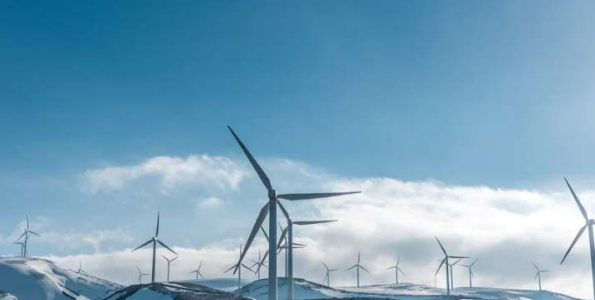
The UK Government, in hosting COP, the world’s biggest climate meeting later this year, has an opportunity to lead but also to help bring these major climate players to the table to increase ambition and action.
China’s green legal system also shines a light on the UK’s own efforts to allow – or block – court cases that protect the environment.
The UK will be keen to avoid embarrassment in relation to projects which contradict its own laudable rhetoric on climate action, such as the recent furore over the proposed coal mine in Cumbria.
In an embarrassing defeat for the government, a judge recently ruled that plans to build a third runway at Heathrow went against the advice of its own Climate Change Committee. This ruling has since been overturned but campaigners have vowed to continue challenging the plan at every stage.
Climate challenges ahead
We are far from a consistent approach to tackling climate change, and the examples above show the complexity and difficulty of the task facing governments.
In setting a 2060 deadline to go carbon neutral, China has planted an ambitious flag in the ground, encouraging other countries to show ambition and Beijing’s overhaul of green legal protections can only be viewed as a good thing. But its hesitancy to raise its interim targets has seen some question its resolve.
More importantly, China will now need to translate its commitments into real-world emission reductions. This is where the rubber meets the road.
Ultimately, a combination of firm targets, strong laws and serious ambition are essential for every government in the world.
About the Author
James Thornton is the founding CEO of ClientEarth. James is a world authority on the power of the law to create lasting change, having dedicated his life to fighting for climate and environmental justice.
James launched ClientEarth in 2007, sparking fundamental change in the way environmental protections are made and enforced across Europe. Now operating globally, ClientEarth uses advocacy, litigation and research to address the greatest challenges of our time – including nature loss, human health and social justice.
In the last decade alone, his creative and critical-thinking has shaped an EU-wide law banning illegally harvested rainforest timber, won numerous cases against governments for failing to tackle air pollution, and blocked the largest coal plant in Europe. He and his team of notfor-profit lawyers use the most effective tool in the arsenal for change, the law. The New Statesman has named James as one of 10 people who could change the world. The Lawyer has picked him as one of the top 100 lawyers in the UK and he was named as one of the 1,000 most influential people in London.
He has won Leader of the Year at the Business Green Awards three times and was awarded Charity Leader of the Year in 2020. The Financial Times awarded him its Special Achievement accolade at the FT Innovative Lawyers Awards. James can be heard on a diverse mix of broadcast, print and multimedia including Channel 4, BBC Radio 3 & 4, TEDx and The Guardian.

Response 3 of 3
Prof. WANG Yuanfeng, Beijing Jiaotong University, Vice-Chairman, Chinese Association of Development Strategy Studies; and Jersey Wang LEE, Assistant at China Forum, CISS
Since the industrial revolution, environmental challenges such as climate change, biodiversity loss and pollution have grown in number and severity as a result of ever-increasing greenhouse gas emissions and pollutants. This is disrupting the balance in the Earth’s ecosystems and laying bare the growing tensions in the relationship between humans and nature. In a report titled Making Peace with Nature released in February 2021, the United Nations Environment Programme identified the climate emergency, biodiversity loss, and environmental pollution as the three major crises facing the Earth. The three interlinked crises threaten the viability of humanity as a species. Among the three aforementioned crises, climate change poses the most severe challenge and is the one in most urgent need of solutions.
The Paris Agreement, adopted at the 2015 UN Climate Change Conference, provides a durable framework to guide global efforts to combat climate change from 2020 onwards. However, since the signing of the agreement, there has been a continued rise in global greenhouse gas emissions.
Most countries have failed to take climate actions that put humanity on a path to meet the Paris Agreement goals. UN Secretary-General Antonio Guterres has called on the nations of the world to submit stronger, more ambitious national climate action plans that cut 2030 global emissions by 45 percent from their 2010 levels, and reach net zero emissions by 2050.
To that end, the UK has established itself as a climate leader with the world’s most ambitious emissions reduction target. On April 20th 2021, the UK announced new climate targets, that would achieve a 78% reduction in annual carbon emissions by 2035 compared with 1990 levels. This represents a further reduction of 10% from previous targets.
China has also made commitments. On September 22nd 2020, President Xi Jinping declared in a speech to the UN Assembly that China will not only commit to reaching peak carbon emissions in 2030, but also to achieving carbon neutrality by 2060. As a country still in the process of development, China has set an ambitious timeline for carbon neutrality, only a decade behind many developed countries that have already passed through decades of deindustrialization and economic transformation. These commitments are welcome news and certainly a major step in the right direction.
China is at the same time the world’s biggest emitter of greenhouse gases, the largest manufacturer and consumer of automobiles and the largest provider and consumer of renewable energy.
China and the UK therefore have great potential to work together in exploring effective pathways in leading their respective nations to achieve carbon neutrality and address the global climate crisis.
As the world leader in clean energy, China has been manufacturing solar panels and wind turbines at a price competitive with traditional fossil fuels. From 2008 to 2013, the growth in China’s solar panel manufacturing capacity led to fall in global prices of 80%. China has continued to provide incentives and support for technological innovation and manufacturing upgrades that can help not just itself, but the UK and the whole world to rapidly transition towards a cleaner future.
This is especially important for less developed countries that have not yet entered the stage of industrialization historically associated with the most intensive usage of fossil fuels. Unless they are provided with an affordable clean energy alternative, they may be forced to choose between the economic livelihood of their citizens, and a cleaner planet for all.
While developed countries such as the UK have made significant progress in converting their energy infrastructure from fossil fuel dependence towards much greater utilization of renewable energy, some challenges do remain.
These challenges include issues such as base-load energy, energy storage, and ramping energy usage. Addressing these challenges requires international cooperation between scientists and experts to find the most effective solutions in terms of technological, social, or infrastructure changes.
As a world leader in renewable energy and climate action, the UK can also make an important contribution to the global effort. There is broad consensus across the political spectrum in the UK on the need to address climate change.
The UK is using London’s position as a global financial hub to support a greener direction for economic transition. Starting this year, after fully leaving the EU, the UK has set up its own domestic Emissions Trading Scheme (UK ETS) to replace the European emissions trading market.

As the “world’s first emissions trading scheme with net-zero emissions target”, this has, from the start, lowered the UK’s emissions cap by 5% from its level under the EU scheme. The Bank of England has set out plans to use £20 billion in corporate bond holdings to encourage companies to cut emissions even faster. The UK can also use its extensive experience to help other countries, including China, promote their own nascent emission trading schemes and better utilize green financial tools.
The need for global cooperation is great and urgent. The impact of warming to 2 C rather than 1.5 C above pre-industrial levels could be dramatic. Yet current levels of climate ambition are far from putting us on a pathway that ensures that the average global temperature remains no more than 1.5 C above pre-industrial levels.
This will require stronger commitments from all countries at the November COP 26 to be held in Glasgow. China and the UK will need to work together to make the conference a success.
Humanity is at a crossroads. Humanity’s path will depend on the action that we take, starting at the COP 26, and how we work together, with our respective areas of specialization, to help each other and the world curb climate change.
Humanity is at a crossroads. Humanity’s path will depend on the action that we take, starting at the COP 26, and how we work together, with our respective areas of specialization, to help each other and the world curb climate change.

About the Author
Prof. WANG Yuanfeng, is a faculty member at Beijing Jiaotong University and ViceChairman of the Chinese Association of Development Strategy Studies. He is an adjunct professor at Tongji University and a mentor for the global leadership programme of Stephen Schwarzman college at Tsinghua University. WANG is a member of the academic committee of International Financial Forum (IFF) and Chairman of the Social Strategy Committee of the CADSS, and chairman of the Sustainable Civil Engineering Committee of the Chinese Society for Urban Studies. He was the executive chairman of the 559th Xiangshan Science Conference with the theme ‘Challenge and Technology Path for the Sustainable Development of Civil Engineering’ and the S42 Xiangshan Science Conference, with the theme ‘The Internet and the Future Education’. In addition, he was also the executive chairman of the 599th Xiangshan Science Conference with the theme ‘Improving Science and Technology Assessment, and Boosting Innovation-driven Development’.
Jersey Wang LEE is a strategic analyst at Shanghai Boshigao Environmental Technology Co., Ltd. He is also an assistant at China Forum, Center for International Security and Strategy, Tsinghua University (CISS). He has a M.S degree in Civil and Environmental Engineering from University of California, Berkeley, U.S.A.

Disclaimer
The views expressed in the UKNCC Guest Contributor Programme are of each author and do not represent those of UKNCC as an organisation or of any individual associated with it. Copyright © 2024 UK National Committee on China CIC (Company number 13040199) All Rights Reserved.


